Article
The Green Enchantment: A Professional Guide to the World of Emeralds
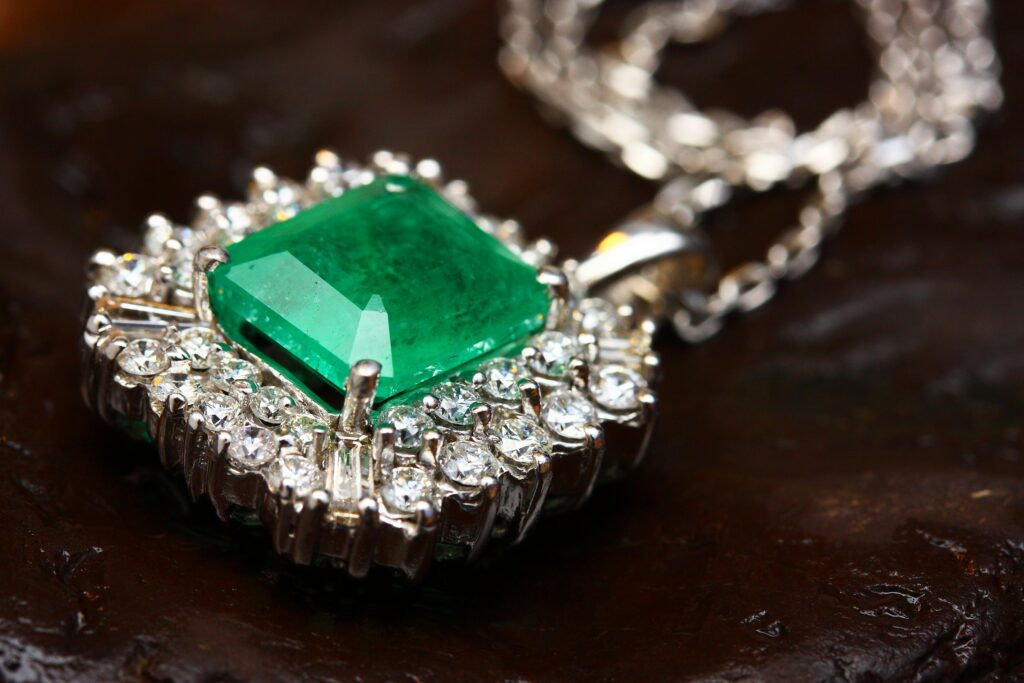
In the world of fine gemstones, there is one color that has symbolized rebirth, luxury, and eternal spring for over six thousand years: the lush, incomparable green of the Emerald. While diamonds are often celebrated for their fire and brilliance, emeralds are prized for something deeper—their “soul.”
For the modern jewelry enthusiast, an emerald is more than just a birthstone for May; it is an investment in nature’s most vibrant art. However, unlike diamonds, emeralds have their own set of rules when it comes to quality, care, and value. If you are looking to add this “King of Gemstones” to your collection, here is everything you need to know to navigate the market with confidence and style.
1. The Color of Royalty: What to Look For
When it comes to emeralds, Color is the supreme factor. While diamonds are graded on a scale of “colorlessness,” emeralds are judged on the intensity and purity of their green.
• The “Ideal” Green: The most valuable emeralds are those with a vibrant, bluish-green hue and a vivid saturation. If a stone is too yellow, it’s considered less valuable; if it’s too light, it might be classified as “green beryl” rather than a true emerald.
• The Origin Story: Historically, Colombian emeralds are the gold standard, known for their warm, glowing green. However, Zambian emeralds have gained massive popularity in 2026 due to their incredible clarity and slightly cooler, bluish-green tones. Choosing between them is often a matter of personal aesthetic rather than “better” or “worse.”
2. The “Jardin”: Embracing Nature’s Fingerprints
In the diamond world, an “inclusion” is often seen as a flaw. In the emerald world, it is a hallmark of authenticity. Most emeralds are filled with tiny fissures, crystals, and liquid bubbles. Gemologists call this the “Jardin” (the French word for garden), because these internal patterns often look like moss or plant life growing inside the stone.
• Why Clarity is Rare: Emeralds are naturally more brittle than sapphires or diamonds. Finding an emerald that is “eye-clean” (appearing clear to the naked eye) is exceptionally rare and significantly increases the price.
• The Authenticity Test: If an emerald looks “perfect”—completely clear with no internal garden—be cautious. It is likely either a synthetic lab-grown stone or a high-quality glass imitation. The Jardin is proof that your stone was forged deep within the Earth over millions of years.
3. The Science of “Oiling”
Because of the natural fissures in emeralds, almost all of them undergo a traditional treatment known as Oiling. This involves submerging the stone in natural oils (usually cedar oil) to fill the surface-reaching cracks and improve the stone’s clarity and color.
• A Standard Practice: Oiling is an internationally accepted trade practice. However, a reputable jeweler should always disclose the level of oiling (Insignificant, Minor, Moderate, or Significant).
• The Premium for “No Oil”: An emerald that achieves a beautiful green without any oil treatment is a “unicorn” in the gemstone world and can command prices that rival or exceed top-tier diamonds.
4. The “Emerald Cut”: Beauty with a Purpose
Have you ever noticed that many emeralds are cut into a rectangular shape with stepped facets? This is the famous Emerald Cut.
While it looks incredibly sophisticated and architectural, it was originally designed for safety. Because emeralds are prone to chipping at the corners, the “stepped” corners of this cut protect the stone from physical impact. Furthermore, this cut allows the observer to look deep into the stone, highlighting the richness of the color and the unique patterns of the Jardin.
5. Professional Care: Handling Your Treasure
An emerald is a lifetime investment, but it requires a different kind of love than a diamond.
• Avoid the Ultrasonic: Never put an emerald in an ultrasonic or steam cleaner. The high-frequency vibrations and heat can strip the natural oils out of the stone, leaving it looking dry and brittle.
• The “Last On” Rule: Emeralds are sensitive to chemicals. Always apply your perfume, hairspray, and lotions before putting on your emerald jewelry to prevent the chemicals from seeping into the stone’s fissures.
• Gentle Cleaning: The best way to clean your emerald is with a soft micro-fiber cloth and lukewarm, soapy water.
Conclusion: Investing in a Legacy
Owning an emerald is like owning a small piece of a hidden forest. It is a stone that feels alive, changing its hue slightly depending on the light and the time of day. Whether you are choosing a classic Colombian emerald set in yellow gold for a “royal” look, or a sleek Zambian stone in platinum for a modern “Smart Casual” vibe, you are choosing a gem that has captivated icons from Cleopatra to Elizabeth Taylor.
What draws you to the emerald? Is it the mysterious “Jardin” inside, or the undeniable power of its green?
Pro-Tip: If you are buying an emerald for an engagement ring or a piece you plan to wear daily, ensure it has a protective setting, such as a bezel or heavy prongs, to shield the edges of the stone. Beauty is timeless, but a little extra protection ensures your legacy stays intact!